The Mission
The Asian Pacific American Leadership Initiative (APALI) began in Fall 2001 as a flagship leadership development program of the Pan-Asian American Community House (PAACH). Developed collaboratively by PAACH staff and students, APALI is an experiential, cohort-based program designed to meet the leadership, identity development, and community-building needs of Asian Pacific Islander (API) students.
APALI’s mission is to empower students through identity exploration, dialogue, and leadership training, providing a foundation for personal growth, community engagement, and future leadership. To further strengthen leadership development, APALI integrates the PAACH Leadership Series, providing participants with additional opportunities to build and refine their leadership skills.
The Objectives
APALI achieves this mission through the following objectives:
- Explore leadership styles through a multicultural and Pan-API lens
- Share individual experiences and contribute to collective learning and group development
- Develop an understanding of the diversity and complexities of API communities
- Build a nuanced understanding of Pan-API identity beyond monolithic narratives
- Gain the knowledge, skills, and confidence to serve as agents of change in academic, professional, and community contexts

The Program
The Retreat
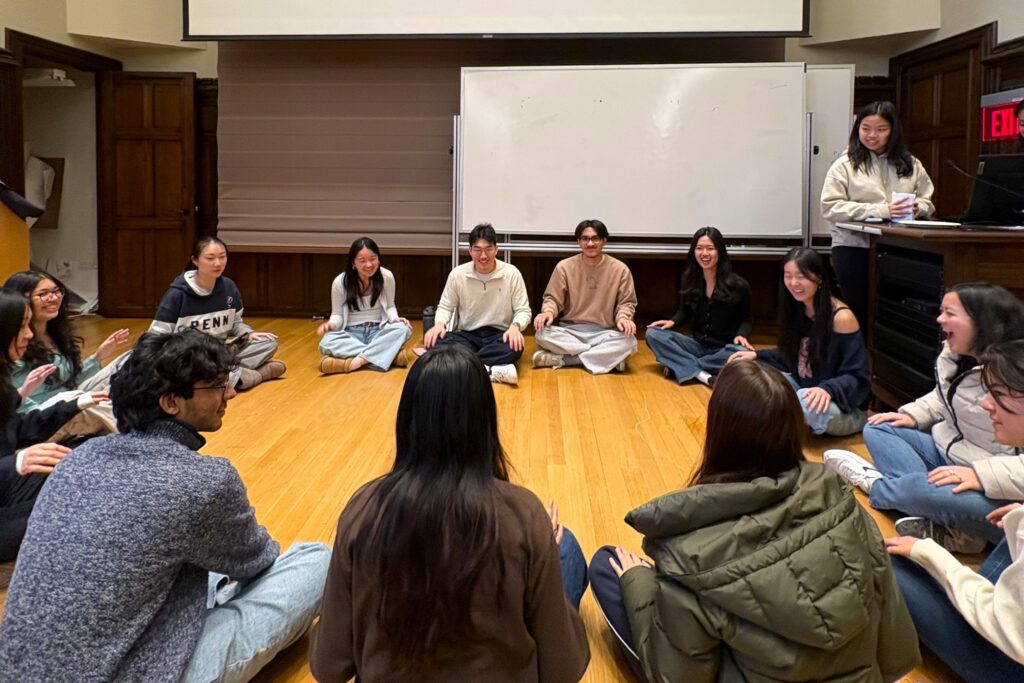
The APALI Retreat serves as the foundation of the program. The weekend retreat focuses on community building, identity exploration, and leadership skill development. Through guided dialogue, reflection, and collaborative activities, participants establish group norms, build trust, and begin contextualizing their personal identities within broader API histories and experiences.
The Sessions
Following the retreat, participants commit to six facilitated sessions throughout the semester. Sessions are led by the APALI facilitators and use dialogue-based and experiential learning methods.
Topics evolve annually to reflect contemporary issues impacting API communities and have historically included:
- The model minority myth and racial stereotypes
- Mental health, burnout, and family dynamics
- Intergenerational trauma and healing
- Gender, sexuality, and patriarchy
- Media, pop culture, and representation
- Leadership development, public speaking, and community organizing
Through dialogue, reflection, and interactive activities, participants deepen their understanding of identity, build leadership competencies, and develop frameworks for advocacy and community engagement.
Getting Involved
Students may be nominated (self-nominations are encouraged) and must submit an application to participate in APALI.
For more information, contact PAACH Associate Director Daniel Hoddinott at Danielnh@upenn.edu
Testimonials:
APALI was my stepping stone into getting involved with the Asian American Pacific Islander (AAPI) community at Penn. As an underclassman, I formed lasting bonds with upperclassmen who were both my mentors and my close friends. I learned about our extensive diaspora and history, engaged with current sociopolitical issues, heard from my peers about their experiences as AAPI individuals, and explored my own intersectional identity as a queer Asian American. Influenced heavily by my time in APALI, I minored in Asian American Studies (ASAM), planned events for Asian Pacific American Heritage Week (APAHW), became a PEER mentor, and eventually returned to APALI itself as a facilitator. I would not have grown to be the student, friend, leader, community member, and person I am today without APALI.
Isabella An
C'25 Facilitator (2024-25)
Participant (Fall 2022)
As someone who was passionate about Asian American activism in high school, I was surprised and sad to have lost my connection to my heritage in college. I spent most of my time in pre-professional clubs and got lost in the work-hard, career focused culture of Penn. I joined APALI my junior year and it really did change my last two years at Penn for the better. I discovered a community that welcomed me from Day 1 and supported me through the toughest of times. I made friends that changed my perspective on life and inspired me to become a better leader, friend, and person. I am very grateful for APALI - it will be one of my favorite memories of Penn.
Richard Liu
W’26 Facilitator (2025)
Participant (Spring 2025)